Task: Respond to the following questions in four short paragraphs, one dedicated to each question.
1. As you moved through this course, you were asked to complete various portions of research: proposal, outlines, annotated bibliography, and the research itself. These were designed to facilitate the process of learning about research and the steps that could/should be undertaken in order to stay organized and moving forward in the writing. Which did you find most beneficial to your progress? Overall, what surprised you the most about the research process?
2. What do you still need to complete when it comes to your research paper in this course? What feedback has been most helpful, either from your instructor or your peers, in helping you identify necessary changes to make as you have moved toward completion of this project?
3. What type of writing do you anticipate doing in the near future? How will research be a part of that?
4. What “conversations” in your field do you plan to continue to take part in? Why? How will you do so? For instance, someone may be going into Criminal Justice but be particularly interested in conversing about the use of technology such as body cams to improve community-police relationships.
Task:
Respond to the following questions in four short paragraphs, one dedicated to each question:
example
As you moved through this course, you were asked to complete various portions of research: proposal, outlines, annotated bibliography, and the research itself. These were designed to facilitate the process of learning about research and the steps that could/should be undertaken in order to stay organized and moving forward in the writing. Which did you find most beneficial to your progress? Overall, what surprised you the most about the research process?
a. I found the proposal and annotated bibliography the most challenging and also the most beneficial. With the proposal I had to really think about what I wanted my paper to be about, getting down to the nitty-gritty details and ensuring enough specificity to ensure that the topic is clearly covered without going over the allowed word count. For the annotated bibliography, I found that I was not narrow enough, not so much in the sense that the sources were incorrect, just that I had failed to put enough time into deciding where it would fit into my paper. I would say that I generally write my papers in their entirety, then go back and find sources after the fact that support my thesis and can be interjected into the text. Having to go about the process in an entirely different manner has been a challenge, but an appreciated change of pace. Overall, the amount of time and effort required for thorough research, the need for critical thinking and analysis, and the iterative nature of the process were most surprising. The many revisions and unexpected challenges have been both rewarding and demanding.
2. What do you still need to complete when it comes to your research paper in this course? What feedback has been most helpful, either from your instructor or your peers, in helping you identify necessary changes to make as you have moved toward the completion of this project?
a. I lack finishing the paper itself as well as going through the editing process to ensure clarity and cohesiveness. I found much of the information from my professor extremely helpful. There were instances in week one where my research question was too broad and needed to be narrowed down. This continued into week two when it finally clicked, and I was able to come up with a better question that was enough without being too much. From my peers, I was able to see different approaches and gain some insightful views of real-world applications.
3. What type of writing do you anticipate doing in the near future? How will research be a part of that?
a. As a criminal justice major, I anticipate engaging in various types of writing, including research papers, case studies, reports, policy analyses, and memos. Research will be a fundamental aspect of my work in criminal justice as it will help me to understand current trends, policies, legislation, and best practices in the field.
b. Whether I am writing a research paper on a specific criminal justice topic, drafting a report on crime statistics, or analyzing case studies to inform decision-making, research will enable me to gather evidence, support my arguments, and make informed recommendations. Moreover, staying updated with the latest research findings and advancements in criminal justice will be essential for developing effective strategies, policies, and interventions to address emerging challenges in the field. Therefore honing in on my research skills and critically analyzing existing literature will be crucial for my success in the criminal justice profession.
4. What “conversations” in your field do you plan to continue to take part in? Why? How will you do so? For instance, someone may be going into Criminal Justice but be particularly interested in conversing about the use of technology such as body cams to improve community-police relationships.
a. Continuing to engage in conversations within the criminal justice field is essential for staying informed, sharing insights, and contributing to advancements in the field. Being interested in the use of technology like body cameras to improve community-police relationships, provides an opportunity to bring about discussions related to the effectiveness of this technology, its impact on transparency and accountability, ethical considerations, and best practices for implementation.
b. To actively participate in these conversations, I can join professional associations, attend conferences and seminars, contribute to research studies or publications, engage in online forums and social media discussions, and collaborate with other professionals and researchers who share my interests. By staying actively involved in these conversations, I can contribute to the ongoing dialogues, gain new perspectives, and help shape the future of criminal justice practices.
Essay Writing Service Features
Our Experience
No matter how complex your assignment is, we can find the right professional for your specific task. Academiarank is an essay writing company that hires only the smartest minds to help you with your projects. Our expertise allows us to provide students with high-quality academic writing, editing & proofreading services.
Free Features
Free revision policy
$10Free bibliography & reference
$8Free title page
$8Free formatting
$8How Our Essay Writing Service Works
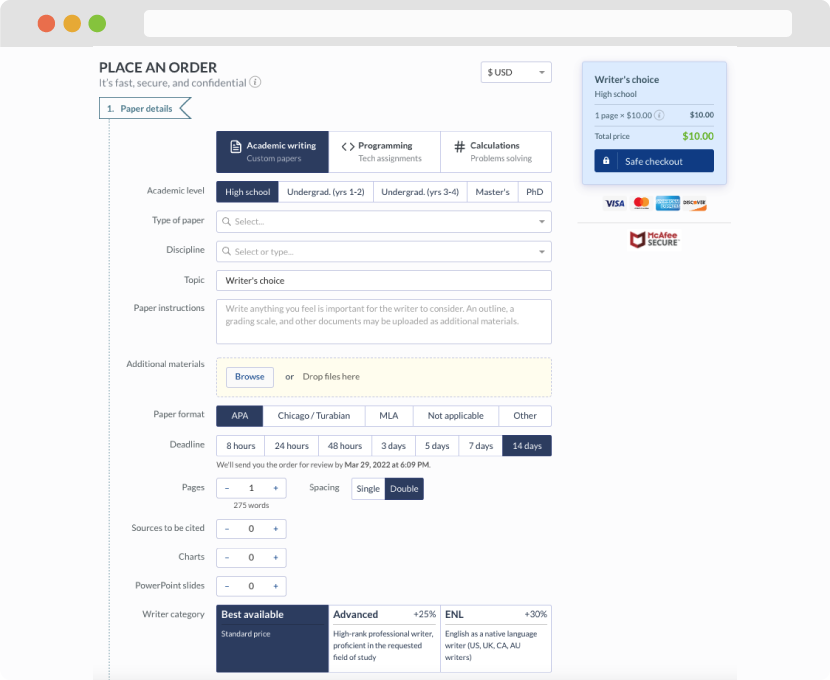
First, you will need to complete an order form. It's not difficult but, in case there is anything you find not to be clear, you may always call us so that we can guide you through it. On the order form, you will need to include some basic information concerning your order: subject, topic, number of pages, etc. We also encourage our clients to upload any relevant information or sources that will help.
Complete the order form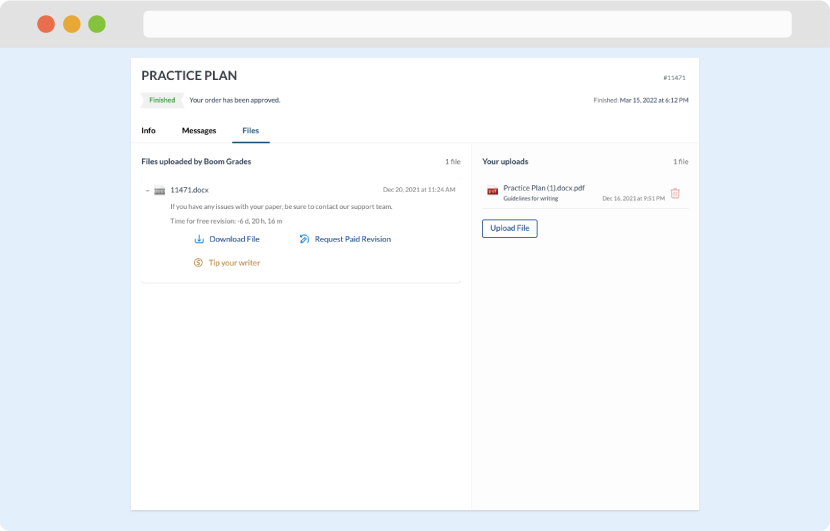
Once we have all the information and instructions that we need, we select the most suitable writer for your assignment. While everything seems to be clear, the writer, who has complete knowledge of the subject, may need clarification from you. It is at that point that you would receive a call or email from us.
Writer’s assignment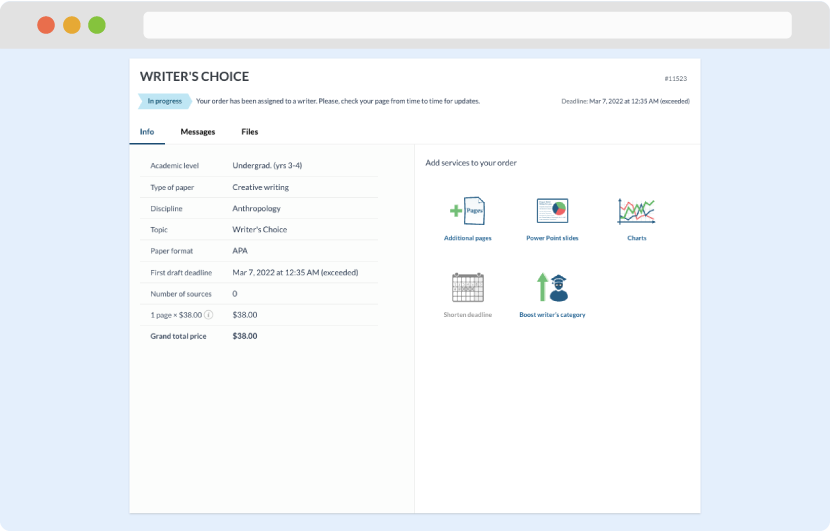
As soon as the writer has finished, it will be delivered both to the website and to your email address so that you will not miss it. If your deadline is close at hand, we will place a call to you to make sure that you receive the paper on time.
Completing the order and download