Drug discovery is the process by which new candidate medications are discovered. This complex and multidisciplinary field involves understanding the disease mechanism, identifying potential drug targets, and developing compounds that can modulate these targets to produce therapeutic effects.
The relevance of drug discovery cannot be overstated. With the global burden of disease continually evolving, the need for new and effective treatments remains critical. Advances in drug discovery not only improve health outcomes but also enhance the quality of life and longevity.
The journey of drug discovery dates back to ancient times when natural products were used for medicinal purposes. Over the centuries, the field has evolved dramatically, transitioning from serendipitous discoveries to a more systematic, technology-driven approach. This historical context provides a foundation for understanding current trends and future directions.
High-Throughput Screening (HTS) is a method used to quickly conduct millions of chemical, genetic, or pharmacological tests. The process allows researchers to rapidly identify active compounds, antibodies, or genes that modulate a particular biomolecular pathway. This technology is fundamental in accelerating the early stages of drug discovery.
Combinatorial chemistry involves the rapid synthesis or computational generation of a large number of different but structurally related molecules. These libraries of compounds are then screened for their biological activity, providing a wealth of potential drug candidates. This approach has revolutionized the way new drugs are discovered and optimized.
Bioinformatics and computational biology play crucial roles in drug discovery by analyzing biological data and predicting the structure and function of drug targets. These fields utilize algorithms and software tools to interpret complex biological data, facilitating the identification of novel drug targets and the design of new drugs.
CRISPR technology has brought about a new era in genetic research and drug discovery. This powerful tool allows for precise editing of the genome, enabling the study of gene function and the development of gene therapies. CRISPR is particularly promising for treating genetic disorders that were previously deemed untreatable.
Artificial intelligence (AI) and machine learning (ML) are transforming drug discovery by predicting how compounds will behave, identifying new drug targets, and optimizing drug design. These technologies can analyze vast amounts of data much faster than traditional methods, leading to more efficient and effective drug discovery processes.
Small molecule drugs are low molecular weight organic compounds that can easily enter cells and affect biological processes. They form the basis of many traditional pharmaceuticals and continue to be a major focus in drug discovery due to their stability, ease of synthesis, and ability to be administered orally.
Biologics are drugs derived from living organisms. These include proteins, antibodies, and nucleic acids. They are typically larger and more complex than small molecule drugs and are used to treat a variety of conditions, including cancers, autoimmune diseases, and infectious diseases.
Gene therapy involves the delivery of genetic material into cells to treat or prevent disease. This approach has the potential to cure genetic disorders by correcting defective genes. Recent advancements have made gene therapy a promising area of drug discovery, particularly for rare and inherited diseases.
Personalized medicine aims to tailor medical treatment to the individual characteristics of each patient. By understanding a person’s genetic makeup, lifestyle, and environment, researchers can develop targeted therapies that are more effective and have fewer side effects. This approach is becoming increasingly important in the field of drug discovery.
Target identification is the first step in drug discovery, involving the identification of a biological target that plays a key role in the disease process. This could be a protein, gene, or other molecule that can be modulated by a drug to produce a therapeutic effect.
Target validation is the process of demonstrating that modulating the target has a beneficial effect on the disease. This step is critical for ensuring that the target is relevant and that modulating it will lead to the desired therapeutic outcome.
Lead compound identification involves screening chemical libraries to find compounds that have the desired biological activity against the target. These compounds, known as “leads,” serve as starting points for further drug development.
Lead optimization involves modifying the lead compounds to improve their potency, selectivity, and pharmacokinetic properties. This step aims to produce a candidate drug that is safe and effective for use in humans.
Preclinical testing involves laboratory and animal studies to evaluate the safety and efficacy of the candidate drug. This step is crucial for identifying any potential toxic effects before the drug is tested in humans.
Clinical trials are conducted in phases to test the safety and efficacy of the drug in humans. These trials are essential for gaining regulatory approval and bringing a new drug to market.
The cost of developing a new drug is extremely high, often exceeding billions of dollars. This includes the costs of research and development, clinical trials, and regulatory approval. High costs are a significant barrier to innovation in drug discovery.
The drug discovery process is notoriously lengthy, typically taking over a decade from target identification to regulatory approval. Long timelines can delay the availability of new treatments and increase the overall cost of drug development.
Navigating the regulatory landscape is a complex and time-consuming process. Regulatory agencies, such as the FDA, have stringent requirements for proving the safety and efficacy of new drugs. These hurdles can slow down the drug discovery process and increase costs.
Drug resistance, particularly in the context of antibiotics and cancer therapies, is a major challenge. As pathogens and cancer cells evolve, they can become resistant to existing treatments, necessitating the continuous development of new drugs.
Nanotechnology involves the use of nanoparticles to deliver drugs more effectively. This approach can improve the targeting of drugs to specific cells or tissues, reducing side effects and increasing efficacy.
3D bioprinting allows for the creation of complex tissue structures that can be used for drug testing and development. This technology has the potential to reduce the need for animal testing and provide more accurate models of human disease.
Organs-on-chips are microfluidic devices that mimic the structure and function of human organs. These devices can be used to study drug effects and disease mechanisms in a controlled environment, providing valuable insights that can accelerate drug discovery.
Next-generation sequencing (NGS) allows for the rapid and cost-effective sequencing of entire genomes. This technology is critical for understanding the genetic basis of disease and identifying new drug targets.
The rapid development of COVID-19 vaccines is a testament to the advancements in drug discovery. Techniques such as mRNA technology, AI-driven research, and global collaborations were pivotal in accelerating the development process, resulting in safe and effective vaccines in record time.
Recent advancements in oncology have led to the development of targeted therapies and immunotherapies that have significantly improved cancer treatment outcomes. These innovations are based on a deeper understanding of cancer biology and the use of advanced technologies such as CRISPR and AI.
Drug discovery for neurological disorders has seen significant progress with the advent of gene therapies, biologics, and personalized medicine. Conditions such as Alzheimer’s disease, Parkinson’s disease, and multiple sclerosis are the focus of intensive research efforts, leading to new and promising treatments.
The FDA approval process involves a series of rigorous evaluations to ensure that new drugs are safe and effective. This process includes preclinical testing, clinical trials, and a thorough review of the data by FDA experts. Understanding this process is crucial for successfully bringing a new drug to market.
Drug discovery is a global endeavor, and understanding the regulatory requirements of different countries is essential. International regulations can vary significantly, and navigating these differences is a key challenge for pharmaceutical companies.
Ethical considerations in drug discovery include issues related to clinical trial conduct, patient consent, and the use of genetic information. Ensuring ethical practices is vital for maintaining public trust and achieving successful outcomes in drug discovery.
Investment in drug discovery is crucial for driving innovation. Recent trends indicate increasing investment from both public and private sectors, reflecting the growing recognition of the importance of developing new treatments.
Partnerships and collaborations between pharmaceutical companies, academic institutions, and biotech firms are becoming increasingly common. These collaborations leverage the strengths of each partner, facilitating the development of new drugs and therapies.
The global drug discovery market is expected to grow significantly in the coming years. Factors driving this growth include technological advancements, increasing prevalence of chronic diseases, and rising investment in research and development.
Emerging trends in drug discovery include the use of AI and machine learning, the development of personalized medicine, and the application of advanced technologies such as CRISPR and nanotechnology. These trends have the potential to revolutionize the field and lead to the discovery of new and more effective treatments.
Potential breakthroughs in drug discovery include the development of new therapies for previously untreatable diseases, advances in gene editing, and the creation of more effective and targeted cancer treatments. These breakthroughs could significantly improve health outcomes and quality of life.
Big data is playing an increasingly important role in drug discovery. By analyzing large datasets, researchers can identify new drug targets, predict drug behavior, and optimize drug design. The integration of big data into the drug discovery process is expected to lead to more efficient and effective development of new treatments.
Sustainable practices in drug discovery include the use of green chemistry, reduction of waste, and the development of eco-friendly drug production methods. These practices are essential for minimizing the environmental impact of drug development and ensuring the long-term sustainability of the pharmaceutical industry.
Interviews with industry leaders provide valuable insights into the latest trends and developments in drug discovery. These experts can offer perspectives on the challenges and opportunities facing the field and share their visions for the future.
Quotes from researchers highlight the importance of ongoing innovation and collaboration in drug discovery. These insights underscore the need for continued investment in research and development to address the evolving global health challenges.
Opinions from regulatory bodies provide guidance on the approval process, ethical considerations, and best practices in drug discovery. These insights are essential for ensuring that new drugs are safe, effective, and ethically developed.
Drug discovery is significant because it leads to the development of new treatments that can improve health outcomes, enhance quality of life, and address unmet medical needs.
The development of a new drug typically takes over a decade, from target identification to regulatory approval. This process involves multiple stages, including preclinical testing and clinical trials.
The main stages of drug discovery include target identification, target validation, lead compound identification, lead optimization, preclinical testing, and clinical trials.
Challenges in drug discovery include high costs, long timelines, regulatory hurdles, and drug resistance. Addressing these challenges requires ongoing innovation and collaboration.
AI impacts drug discovery by predicting how compounds will behave, identifying new drug targets, and optimizing drug design. AI can analyze vast amounts of data much faster than traditional methods, leading to more efficient drug discovery processes.
Personalized medicines are treatments tailored to the individual characteristics of each patient, including their genetic makeup, lifestyle, and environment. This approach aims to develop therapies that are more effective and have fewer side effects.
Drug discovery is a complex and multidisciplinary field that involves understanding disease mechanisms, identifying drug targets, and developing new treatments. Technological advances, such as AI, CRISPR, and nanotechnology, are transforming the field and leading to significant innovations.
For those interested in learning more about drug discovery, there are numerous resources available, including scientific journals, industry reports, and educational courses. Staying informed about the latest trends and developments is essential for anyone involved in this dynamic and rapidly evolving field.
Essay Writing Service Features
Our Experience
No matter how complex your assignment is, we can find the right professional for your specific task. Academiarank is an essay writing company that hires only the smartest minds to help you with your projects. Our expertise allows us to provide students with high-quality academic writing, editing & proofreading services.
Free Features
Free revision policy
$10Free bibliography & reference
$8Free title page
$8Free formatting
$8How Our Essay Writing Service Works
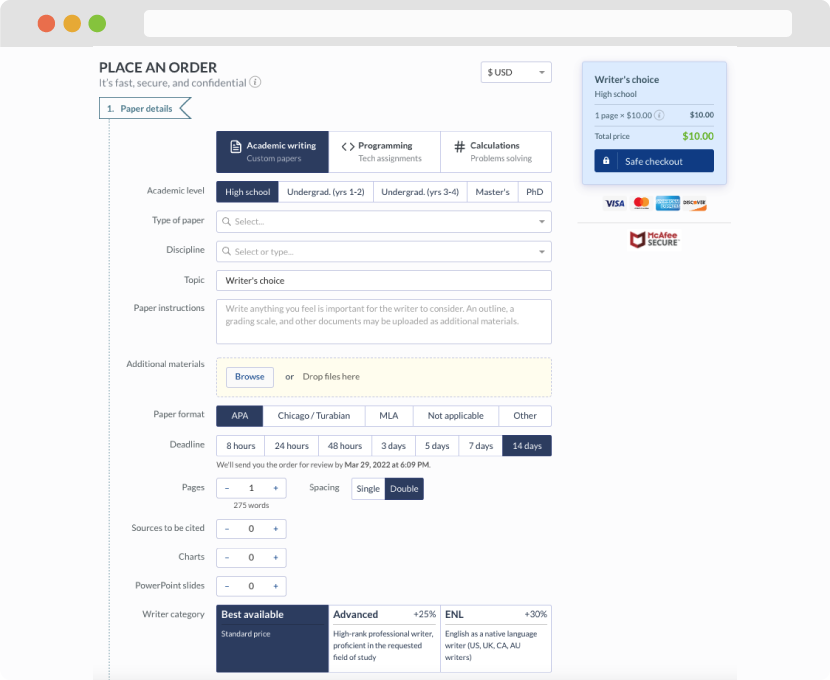
First, you will need to complete an order form. It's not difficult but, in case there is anything you find not to be clear, you may always call us so that we can guide you through it. On the order form, you will need to include some basic information concerning your order: subject, topic, number of pages, etc. We also encourage our clients to upload any relevant information or sources that will help.
Complete the order form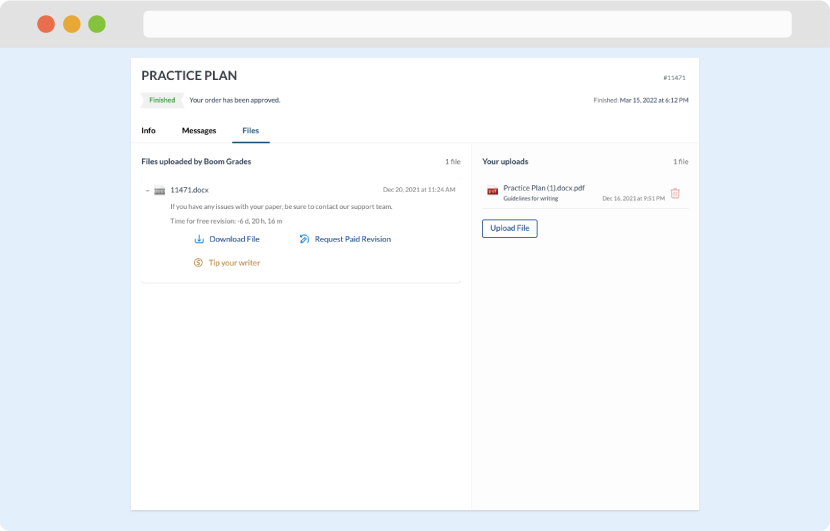
Once we have all the information and instructions that we need, we select the most suitable writer for your assignment. While everything seems to be clear, the writer, who has complete knowledge of the subject, may need clarification from you. It is at that point that you would receive a call or email from us.
Writer’s assignment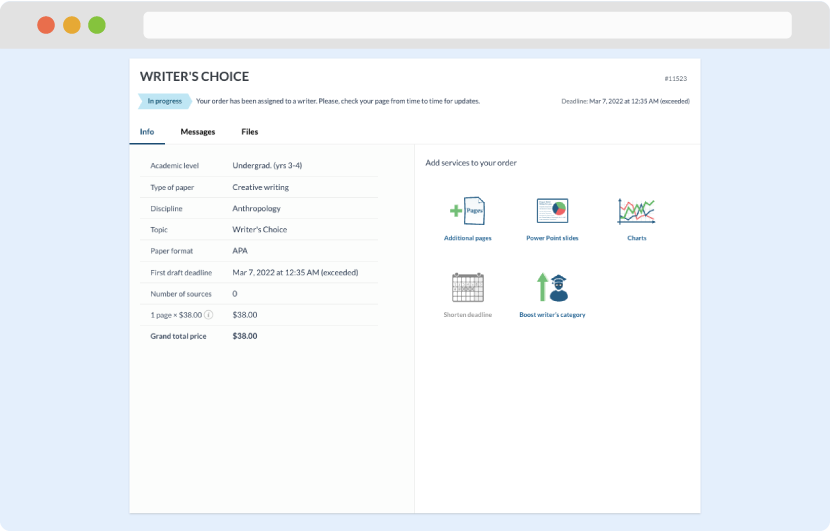
As soon as the writer has finished, it will be delivered both to the website and to your email address so that you will not miss it. If your deadline is close at hand, we will place a call to you to make sure that you receive the paper on time.
Completing the order and download