The immune system is our body’s defense mechanism against pathogens, and T cells play a crucial role in this defense. Among the various components of the immune system, T cells and their receptors are fundamental in recognizing and responding to antigens. In this article, we’ll explore the subcellular structure of the T cell receptor (TCR) and delve into the immune status of individuals who fail to express CD3 zeta and CD4, two critical molecules in T cell function.
The T cell receptor (TCR) is a complex protein on the surface of T cells that allows them to recognize antigens presented by other cells. This receptor is composed of several subunits, each playing a vital role in T cell activation and signaling.
The TCR is primarily made up of alpha and beta chains. These chains are composed of both variable (V) and constant (C) regions. The variable regions are responsible for the antigen specificity of the receptor, while the constant regions provide structural support.
The variable regions of the TCR alpha and beta chains undergo genetic recombination to generate a diverse repertoire of receptors capable of recognizing a wide array of antigens. The constant regions, on the other hand, remain unchanged and serve as a scaffold for the receptor.
The TCR complex also includes the CD3 complex, which is essential for signal transduction.
The CD3 complex is composed of gamma, delta, and epsilon chains, which are involved in transmitting signals from the TCR to the cell’s interior upon antigen binding.
The CD3 zeta chain is a crucial component of the TCR complex. It is involved in the amplification of the activation signal, ensuring that the T cell responds effectively to the presence of an antigen.
The CD3 zeta chain plays a pivotal role in signal transduction. When the TCR binds to an antigen, the CD3 zeta chain helps transmit this signal into the cell, leading to T cell activation and subsequent immune responses.
Without the CD3 zeta chain, the signal transduction process is impaired, leading to a weak or non-existent immune response. This chain is essential for the proper activation of T cells, which are necessary for mounting an effective immune defense.
Individuals who lack the CD3 zeta chain often suffer from severe immunodeficiency. Their T cells are unable to properly respond to antigens, making them highly susceptible to infections and other diseases.
Clinically, CD3 zeta deficiency can present with recurrent infections, failure to thrive, and an increased risk of opportunistic infections. These individuals may also exhibit symptoms related to immune dysregulation, such as autoimmune disorders.
The CD4 molecule is another critical component of the immune system, particularly in the function of helper T cells.
CD4 is a glycoprotein with four extracellular domains (D1-D4) that are involved in binding to MHC class II molecules on antigen-presenting cells.
The CD4 molecule also has a transmembrane region that anchors it to the cell membrane and a cytoplasmic region that participates in intracellular signaling.
CD4 is primarily expressed on helper T cells (Th cells). It aids in the activation of these cells by binding to MHC class II molecules on antigen-presenting cells. This interaction is crucial for the proper activation and function of Th cells.
The binding of CD4 to MHC class II molecules stabilizes the interaction between the TCR and the antigen-MHC complex, enhancing the activation signal and ensuring a robust immune response.
A deficiency in CD4 expression severely compromises the immune system’s ability to respond to infections. CD4-deficient individuals are particularly vulnerable to opportunistic infections and may suffer from conditions similar to those seen in advanced HIV/AIDS patients.
Clinically, CD4 deficiency can lead to frequent infections, delayed growth, and developmental issues in children. Adults may experience recurrent and severe infections, often with unusual or rare pathogens.
The simultaneous deficiency of CD3 zeta and CD4 molecules can result in Severe Combined Immunodeficiency (SCID), a life-threatening condition characterized by the near-total absence of functional T cells. SCID patients are highly susceptible to infections and require immediate medical intervention.
Management of individuals with CD3 zeta and CD4 deficiencies often involves bone marrow transplantation, gene therapy, and prophylactic antibiotics to prevent infections. Early diagnosis and intervention are crucial for improving outcomes in these patients.
The T cell receptor and its associated molecules, CD3 zeta and CD4, are integral to the immune system’s ability to recognize and respond to pathogens. Deficiencies in these components can lead to severe immunodeficiencies, highlighting the importance of these molecules in maintaining immune health. Understanding the subcellular structures and functions of these molecules provides valuable insights into the mechanisms of immune responses and the potential consequences of their absence.
What is the T Cell Receptor (TCR)?
The T Cell Receptor (TCR) is a complex protein on the surface of T cells that recognizes and binds to specific antigens presented by other cells, initiating an immune response.
What is the function of the CD3 Zeta chain in T cells?
The CD3 Zeta chain is crucial for signal transduction in T cells. It helps amplify the activation signal when the TCR binds to an antigen, ensuring an effective immune response.
How does CD4 deficiency affect the immune system?
CD4 deficiency impairs the activation of helper T cells, leading to a weakened immune response and increased susceptibility to infections and diseases.
What are the clinical signs of CD3 Zeta and CD4 deficiency?
Clinical signs of CD3 Zeta and CD4 deficiency include recurrent infections, failure to thrive, and an increased risk of opportunistic infections, often presenting in early childhood.
What treatments are available for individuals with CD3 Zeta and CD4 deficiency?
Treatments for CD3 Zeta and CD4 deficiency may include bone marrow transplantation, gene therapy, and prophylactic antibiotics to manage and prevent infections.
Essay Writing Service Features
Our Experience
No matter how complex your assignment is, we can find the right professional for your specific task. Academiarank is an essay writing company that hires only the smartest minds to help you with your projects. Our expertise allows us to provide students with high-quality academic writing, editing & proofreading services.
Free Features
Free revision policy
$10Free bibliography & reference
$8Free title page
$8Free formatting
$8How Our Essay Writing Service Works
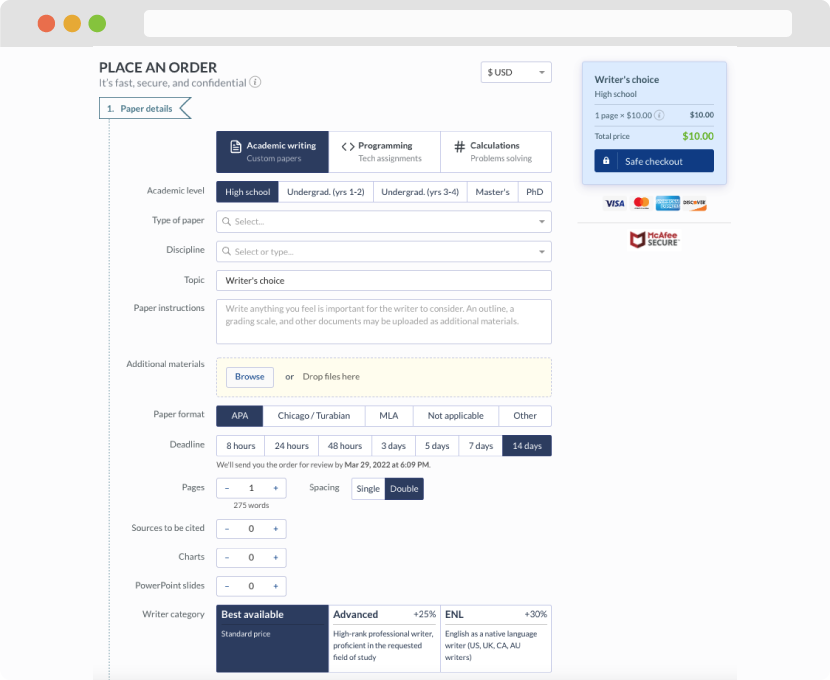
First, you will need to complete an order form. It's not difficult but, in case there is anything you find not to be clear, you may always call us so that we can guide you through it. On the order form, you will need to include some basic information concerning your order: subject, topic, number of pages, etc. We also encourage our clients to upload any relevant information or sources that will help.
Complete the order form
Once we have all the information and instructions that we need, we select the most suitable writer for your assignment. While everything seems to be clear, the writer, who has complete knowledge of the subject, may need clarification from you. It is at that point that you would receive a call or email from us.
Writer’s assignment
As soon as the writer has finished, it will be delivered both to the website and to your email address so that you will not miss it. If your deadline is close at hand, we will place a call to you to make sure that you receive the paper on time.
Completing the order and download