In this present paper, we will discuss business intelligence, the role of business intelligence in the contemporary organization acts as a competitive advantage, the use of data mining and analytics can impact of the decision making of the company. The paper also discusses the system development lifecycle approach to analyzing the reasons for the failure of payroll system implementation at Queensland health, analysis of failure reasons and provides recommendations to overcome in the future implementations.
Business IntelligenceIt : is defined as the set of techniques and tools which are used for the acquisition and transformation of raw data into useful information which is further used for business analysis purpose. The data surfacing is used with the functionality of business intelligence. The business intelligence helps to manage a large amount of structured and unstructured data which enable to identify, create and develop new strategies to explore new opportunities. The aim of business intelligence is to interpret a large amount of data. The interpretations help to analyze the business opportunities and strengths which enable to create a competitive advantage for the company. The interpretations help to analyze the strength, weakness, opportunity and threats of the company which helps in decision making and the development of strategies to achieve the goals and objective of the company with long-term sustainability of the company. The business intelligence provides historical, present, assumed operational information of the company. The functions of business intelligence include online analytical processing, data mining, complex event processing, predictive analytics, benchmarking, prescriptive analytics, complex event processing, text mining, and reporting (Isik et al., 2013) . The business intelligence supports the decision making of the company from operational decision making to strategic development which directly impacts on the goals and an objective of the company. The operational decisions include product positioning, pricing strategy, and others. It also helps to increase the profitability of the company in a sustainable manner. The data intelligence retrieves the internal information of the company such as finance, operational and the external information such as market information about the industry in which the company operates and combined both the information which helps to see the complete snapshot. The business intelligence tools help to enter a new market through analysis and data interpretation. It also helps to analyze the demand for goods and services which help to enter into the new market segment. The business intelligence interpretations help to provide market trends, a performance of the company, knowledge, facts and reliable information which help to improve the efficiency of the company. The components of business intelligence include multidimensional aggregation and allocation, de-normalization, tagging and standardization, actual reporting and alerts of analytical, methods of interfacing with sources of unstructured data, consolidation of a group, rolling forecast, interference of statistics and probabilistic simulations, optimization of key performance indicators, process management, and open item management.
The contemporary business is defined as the modern organization of which there are many dramatic changes in the organization by changing the traditional values from fundamental restricting to revolutionary shifts. The contemporary business includes different types of organizational designs such as matrix structure, team structure, project structure, autonomous internal units, without boundary organizations, and learning organization. The business intelligence helps to provide a competitive advantage to the contemporary organizations by analyzing the market trends, customer and market behavior which helps to see the quick real insight of the business (Fleisher et al., 2015). In the competitive market, it helps to survive by analyzing the internal and external factors which enable to take effective decisions of the company. Following are the ways in which business intelligence acts as competitive advantage for the company:
The use of loyalty cards in the retail industry is an initiative of loyalty program which is used by the retail industry to retain the valuable consumers in the organization. The loyalty programs provide various benefits such as retaining valuable consumers, keep current consumers, increase the sales volume, help to collect data, reduce consumer attribution, consumer profiling, and others. The components of loyalty cards include member points, exclusive discounts, free gift vouchers, cash back and others. Data mining is defined as the subfield of computer science. It involves finding the patterns of the huge amount of data through different methods such as artificial intelligence, statistics, database system and others (Siemens et al., 2012). The aim of data mining is to extract the information from the set of data and convert the data into structured and understanding manner. The data mining helps to analyze the data which enable to take the effective decisions to achieve the goals of the company.
The enterprise resource planning system is defined as the commercial software system which customized and it helps to integrate the business solutions for the core processes. It also helps to integrate the main administration function such as human resource, accounting, and others. The organization wants to update the ERP of the company which helps to enhance the productivity, flexibility and consumer responsiveness, reduce the cost, data consistency and helps to enter into new markets.
It is defined as the application development life cycle which is used in the information system, software engineering, and system engineering to explain the process for planning, analyzing, designing, implementation and maintenance of an information system. The concept is applied to the configuration of different hardware and software configurations. The aim of system development life cycle is to provide the high-quality system which helps to meet the requirements of the company and consumers. Following are the steps to analyze the reasons of failure of implementation of payroll system at
Queensland health at every stage of system development lifecycle approach:
The computer information system is defined as the system in an organized manner, in which the data is collected, filter, process, develop and distribute data. It is comprised of a number of people and computer processes. It is the academic study in which the information and complementary network of hardware and software used to collect, process, develop and distributes the data. The aim of an information system is to support the management, operational and decision making (Che et al., 2013). The data mining is defined as the process of discovering the patterns in the huge amount of data with the different methods such as statistics, database system, and others. The data mining is the analysis of knowledge discovery in the database. The different types of data analysis tools such as tableau public, open-refine, anime, Google fusion table and others. The payroll is associated with the people and the cost associated with it. The data analysis tools include cloud solutions which provide the information to the management and other decision makers of the company.
The Queensland health implementation of the payroll system costs 300% over the budget. The total cost including the implementation, stabilization, and management include $1.25 billion AUD. The failure of implementation has various causalities, namely, resignation by the ministry of health, the strike action of industries, loss of manpower and others. The organizational factors which contribute to the failure of the implementation of the payroll system include poor government, complex scope, confusion in finding the consumers in the project, complex industrial relation system, and others. The payroll system is approximately having 24,000 combinations of award wages and underestimating the complexity related to the industry, in turn, proves disastrous in the implementation of the payroll system at Queensland health (Grosser et al., 2013). The documentation of the requirements was not adequately prepared. The issues were arises at the time of testing such as user acceptance issues and functionality issues which were ignored which lead to the failure of implementation of a payroll system. The issues were communicated between the Queensland and the prime contractor and the contractor further communicate to the Corptech due to which he increases the cost and the budget overruns. The implementation strategy used by the Queensland was very complex, and the main project driver used in the implementation was the Lattice system which was obsolete and not supported by the vendors. The delays in the project were leads to the collapse the potential of the legacy system. The parallel pay testing was not done by the Queensland system due to the internal and external force to go live and risk apparently with an unsupported system. The system has classified the risk into four major but due to go live pressure the system did not fix the problem before going to live which leads to the failure in the implementation of the payroll system. The employees who were involved in the system implementation were not paid which attributed to the inaccurate and improper data. The client-consultant includes three prime contracts which are having different goals which result in complex roles and responsibilities and the overall goals and objectives emphasize the need for project management and government strategies. There is an incomplete understanding of the complexity of the project due to which emphasize the need for project management, but there is no integrated project planning and critical path with clear timelines and deliverables due to which there is no proper account of the roles and responsibilities. The communication issues arise among the departments of education, Corptech, and health which leads to a lack of faith and trust among the department’s outcomes to the failure of implementation of the payroll system.
The Queensland health information system failure clearly explains that the IS failure can prove disastrous to the adopting organization with the estimated cost of the project $1.25 billion AUD for the implementation, stabilize and maintain the project. The number of lessons can be learned from the failure of the implementation of the system such as the client-consultant relationship must not use tripartite relationship client which includes client, consultant, and vendor, and there should be the proper delegation of roles and responsibilities. There should be prior interaction before going to live the implementation of the system. In the quasi multi-contract, there should be proper communication before dealing with the prime contractors who ensure a clear and common objective in the mind of stakeholders. The complete parallel testing is not performed before the implementation of the system because of external and internal pressure to go live and the implementation of the system. There was incomplete legacy system due to lack of support system of vendor and pressure to go live which forces the company to implement the system without complete parallel testing and resolving issues that come at the time of testing. The perspective methodologies were not used in the implementation of a system such as inadequate management, poor requirements elicitations, and others. The IS implementations that were undertaken at Queensland health was failed due to large scale, the complex and contemporary project with the complex stemming such as hierarchies of multiple reporting, multiple subprojects, parallel implementations and the nature of the structure of payroll. The government has taken initiatives to improve the payroll implementation project through improving the ICT strategy which includes twelve key areas. The major areas include ICT asset stabilization at risk and competencies of managing project management. Both of the areas focus on improving the lifecycle management plan. The ICT audit series of constraints that must be placed on high-risk projects which include the project personnel management must be of high quality, Queensland rigorous application program, and methodology, the project must be approved by the chain of commands, and a proper reporting regime must be developed to identify the proper costing of the system.
Essay Writing Service Features
Our Experience
No matter how complex your assignment is, we can find the right professional for your specific task. Academiarank is an essay writing company that hires only the smartest minds to help you with your projects. Our expertise allows us to provide students with high-quality academic writing, editing & proofreading services.
Free Features
Free revision policy
$10Free bibliography & reference
$8Free title page
$8Free formatting
$8How Our Essay Writing Service Works
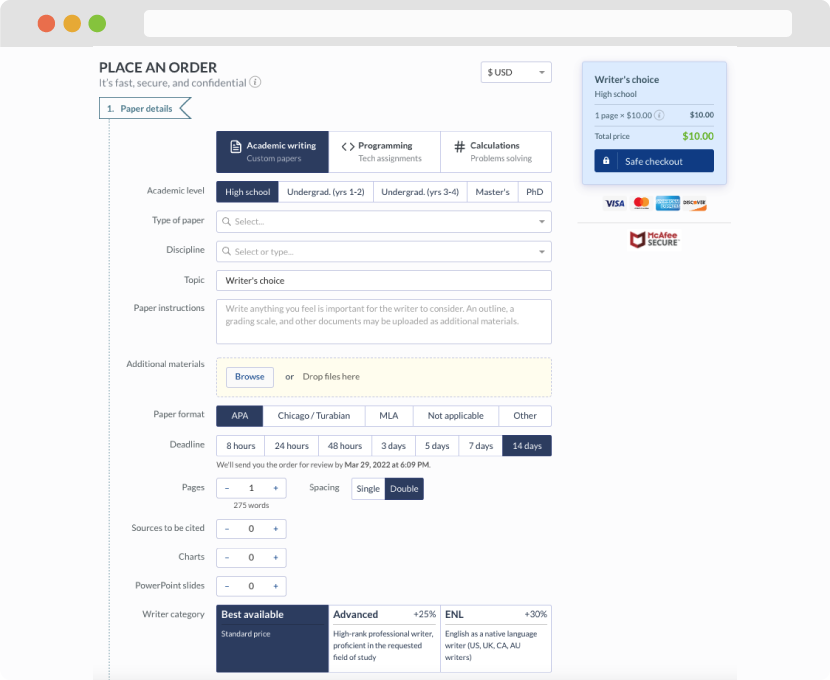
First, you will need to complete an order form. It's not difficult but, in case there is anything you find not to be clear, you may always call us so that we can guide you through it. On the order form, you will need to include some basic information concerning your order: subject, topic, number of pages, etc. We also encourage our clients to upload any relevant information or sources that will help.
Complete the order form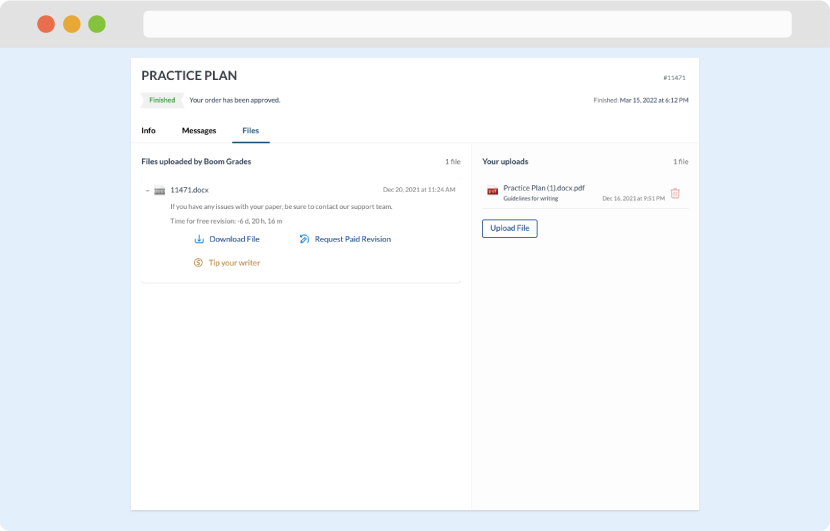
Once we have all the information and instructions that we need, we select the most suitable writer for your assignment. While everything seems to be clear, the writer, who has complete knowledge of the subject, may need clarification from you. It is at that point that you would receive a call or email from us.
Writer’s assignment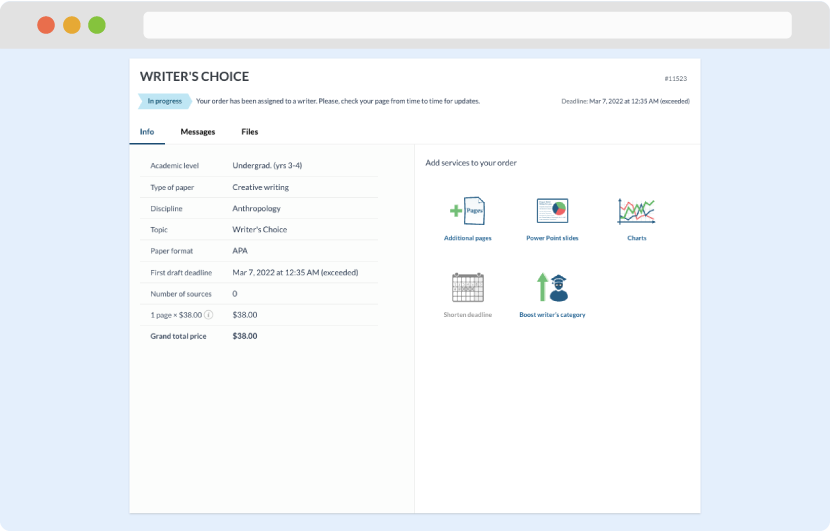
As soon as the writer has finished, it will be delivered both to the website and to your email address so that you will not miss it. If your deadline is close at hand, we will place a call to you to make sure that you receive the paper on time.
Completing the order and download